
Make time for
- Western temple group
- Sculpted temple façades
- Eastern temple areas where open
- Museums and interpretation where available
Place the temples in their historical setting
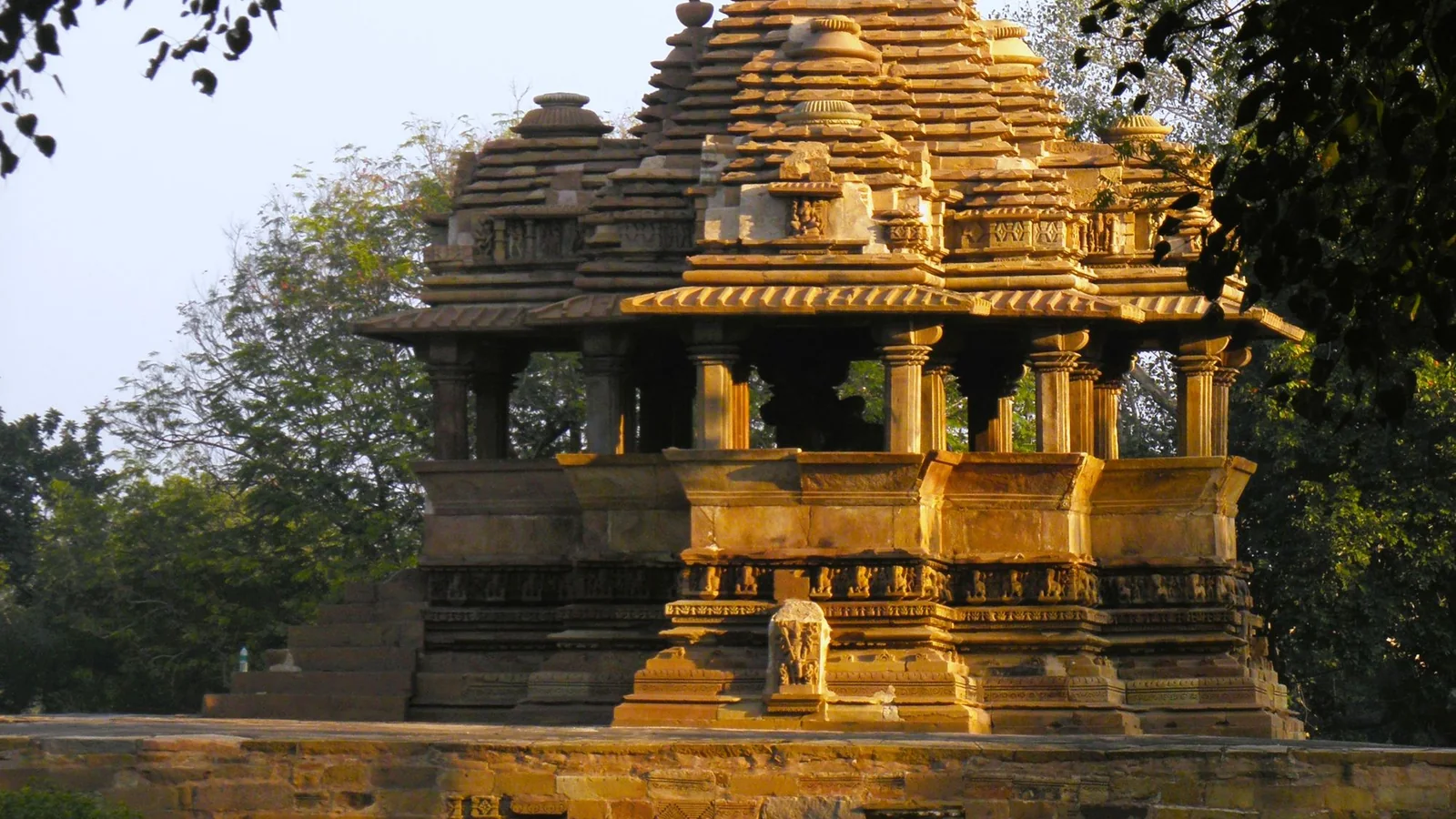
Khajuraho’s surviving temples are associated with the Chandela rulers and the artistic traditions of central India. Hindu and Jain religious buildings form part of the wider heritage. Their architecture, raised platforms and sculpture provide a richer story than the popular shorthand of erotic carvings alone.
UNESCO recognizes the significance of the temple group. A useful first visit gives time to the overall composition as well as individual figures: how towers rise, how surfaces are arranged and how the visitor moves around a building. Interpretation can help connect those details.
Look at the range of sculpted life
The carvings present many subjects, including deities, attendants and scenes of life. Look carefully at their placement and relationship to the architecture instead of searching only for familiar images. A guide or museum explanation can help distinguish artistic conventions and religious context.
Respect conservation barriers and avoid touching or climbing on sculpted surfaces. Check which routes and temple interiors are currently accessible. A rewarding visit often means seeing fewer buildings with attention, rather than quickly moving through every group on a list.
Choose temple groups and museums deliberately
The Western group is a common starting point, while other groups bring different temples and settings. They should be planned as separate locations, not assumed to share one ticket, entrance or opening rule. Check current official visitor information before selecting the order.
Museum time can add context after walking outdoors. If children are travelling, let their questions guide the pace rather than presenting the site as a single sensational subject. Leave room for shade and a meal during warmer weather, and consider returning for another group on a longer stay.
Sources: [1]
Treat central India connections as real travel
Orchha and other heritage destinations can be paired with Khajuraho on a longer trip, but each road leg needs time. A nearby wildlife outing is a different service, with its own authorized admission and activity arrangements. Hiring a transfer does not include a safari.
Share the exact sites, overnight stops and final drop-off in your vehicle enquiry. Confirm luggage, driver arrangements, waiting and the complete billing basis. Choose a circuit according to arrival and departure gateways, rather than combining places only because they appear in the same state guide.
Sources: [1]
Choosing when to visit
Cooler weather can make open-air temple walks easier. Check current site and museum admission, and choose a manageable number of groups rather than assuming all can be explored between transfers.
Planning the transport
Specify the temple groups and accommodation pickup. Include any onward Orchha journey or protected-area transfer as a separate leg, with admission and activities agreed independently.
Common questions
- Are Khajuraho’s temples only known for erotic sculpture?
- That is a limited description. The temples also show religious imagery, architectural design and a much wider range of sculpted figures and scenes.
- Do all temple groups have the same visitor arrangements?
- Do not assume that. Check the current entrance, admission and access for each group and any museum you plan to visit.
- Can I combine Khajuraho with Orchha?
- They can form part of a longer heritage journey, but allow a separate intercity leg and proper time at each destination.
Sources & further reading
Check the relevant official website for current visitor rules, permits and access. How we prepare our guides