
Make time for
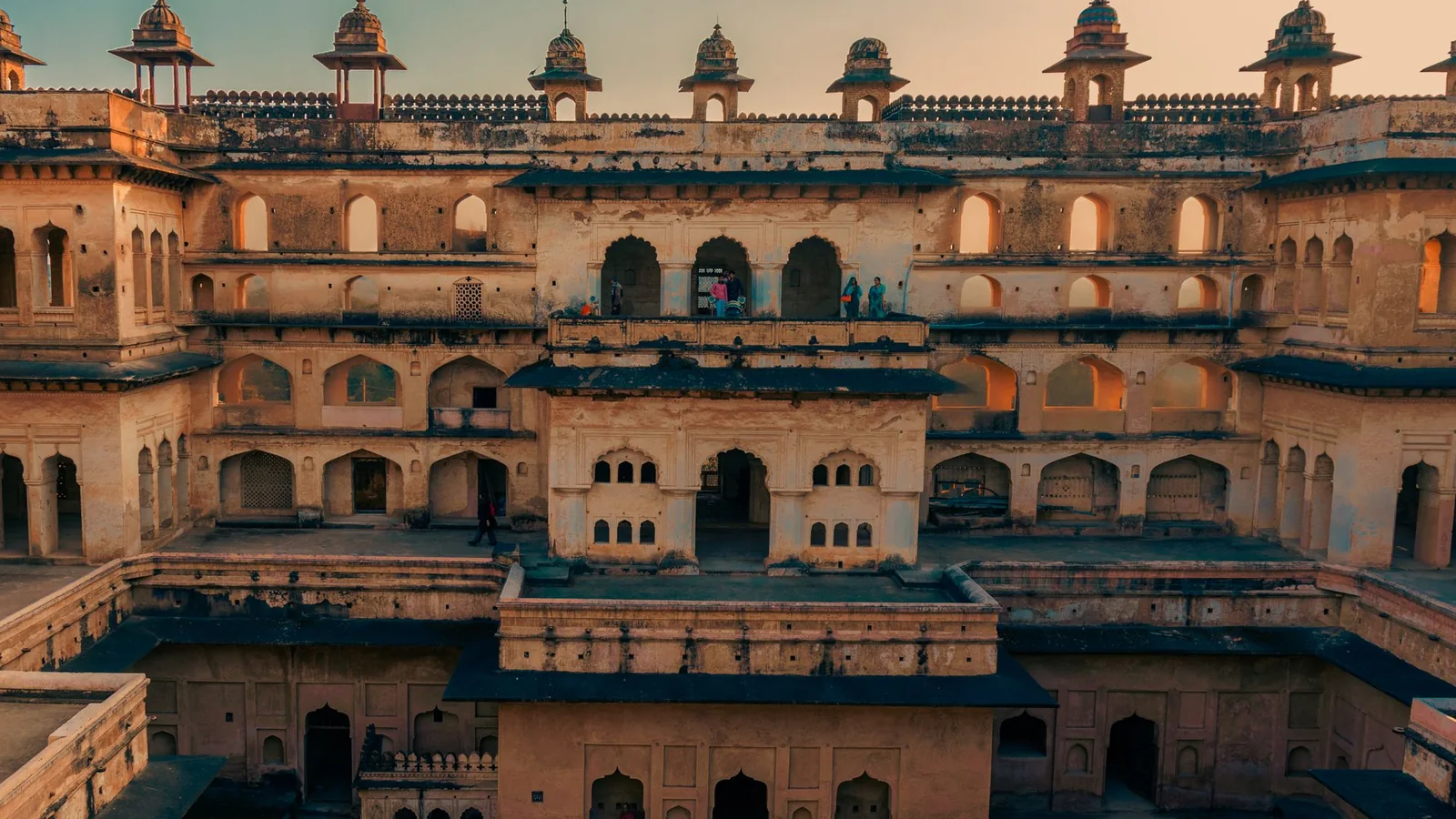
- Orchha palace complex
- Ram Raja Temple
- Chaturbhuj Temple
- Betwa-side cenotaphs
Understand the palace town’s setting
Orchha was founded in the sixteenth century under the Bundela ruler Rudra Pratap. Its monuments sit around the Betwa river landscape, combining royal spaces with active religious sites and memorial architecture. The town’s compact appearance should not obscure the different purposes of those places.
The palace complex offers one way into Bundela court history. Give time to courtyards, views and surviving decorative work rather than only the skyline. Interpretation can make the relationship between the buildings clearer, especially on a first visit to the region.
Distinguish worship from monument viewing
Ram Raja Temple remains an active religious space, while Chaturbhuj Temple adds another prominent form to the town’s skyline. Check current visitor instructions at each. A guide’s architectural description does not replace the rules that govern worship, photography and access.
Dress appropriately and keep the visit flexible around local activity. Some routes may involve steps or uneven surfaces, so ask about current access if the group needs assistance. Religious and heritage visits can be combined, but they should not be treated as one uniform ticketed experience.
Sources: [1]
Leave room for the river setting
The cenotaphs beside the Betwa are an important part of Orchha’s visual identity. Seeing their relationship with the river can be as rewarding as visiting another interior. Choose a permitted viewing area and follow local instructions rather than heading towards the water simply because it looks quiet.
Water levels and river conditions change. A photograph from a previous season does not establish current access to a bank or crossing. If you want an organized river activity, verify its provider, permission and suitability separately; transport to Orchha does not include that service.
Keep the arrival and onward journey clear
Jhansi is a useful nearby arrival area, but the actual station or hotel pickup should be named. An Orchha stay can connect with Khajuraho on a longer heritage trip, provided the intercity leg has its own time and quote. Do not compress both destinations into a hurried transfer day.
Share bags, overnight stops, sightseeing expectations and the final destination with the owner. Confirm waiting, parking and any changes to the route. Palace admission, guiding and religious arrangements remain separate unless specifically agreed with the appropriate provider.
Sources: [1]
Choosing when to visit
Cooler weather often suits walks between heritage sites. Check current temple and monument visitor access, and follow local instructions around the river during rain or high-water conditions.
Planning the transport
Use Jhansi, the station or your Orchha accommodation as the exact pickup. List palace, temple and riverside stops, and confirm which approaches involve walking or steps.
Common questions
- Is Orchha a palace visit or a pilgrimage town?
- It offers both royal heritage and active religious spaces. Plan them with different visitor expectations, and follow temple rules independently of monument admission.
- Can I arrive through Jhansi?
- The Jhansi area is a common gateway. Give the exact station, hotel or meeting point and confirm the onward pickup details.
- Can I add Khajuraho after Orchha?
- They can be paired on a longer heritage trip. Allow a distinct road leg and enough time to explore both instead of using them as quick en-route stops.
Sources & further reading
Check the relevant official website for current visitor rules, permits and access. How we prepare our guides