
Make time for
- Kailasa temple
- Buddhist cave spaces
- Hindu sculptural programmes
- Jain monuments where accessible
Read Ellora as a shared rock-cut landscape
Ellora’s monuments represent Buddhist, Hindu and Jain traditions through different periods of rock-cut work. Their proximity is part of the site’s historical importance. A visit is richer when you notice differences between halls, shrines and sculptural programmes instead of describing everything as one type of cave.
UNESCO recognizes this wider heritage. Decide which sections you most want to understand before arrival, then leave time for interpretation. A guide may help connect the groups, but the visit should still follow current access and conservation instructions rather than an old route copied from another itinerary.
Give the Kailasa temple its own attention
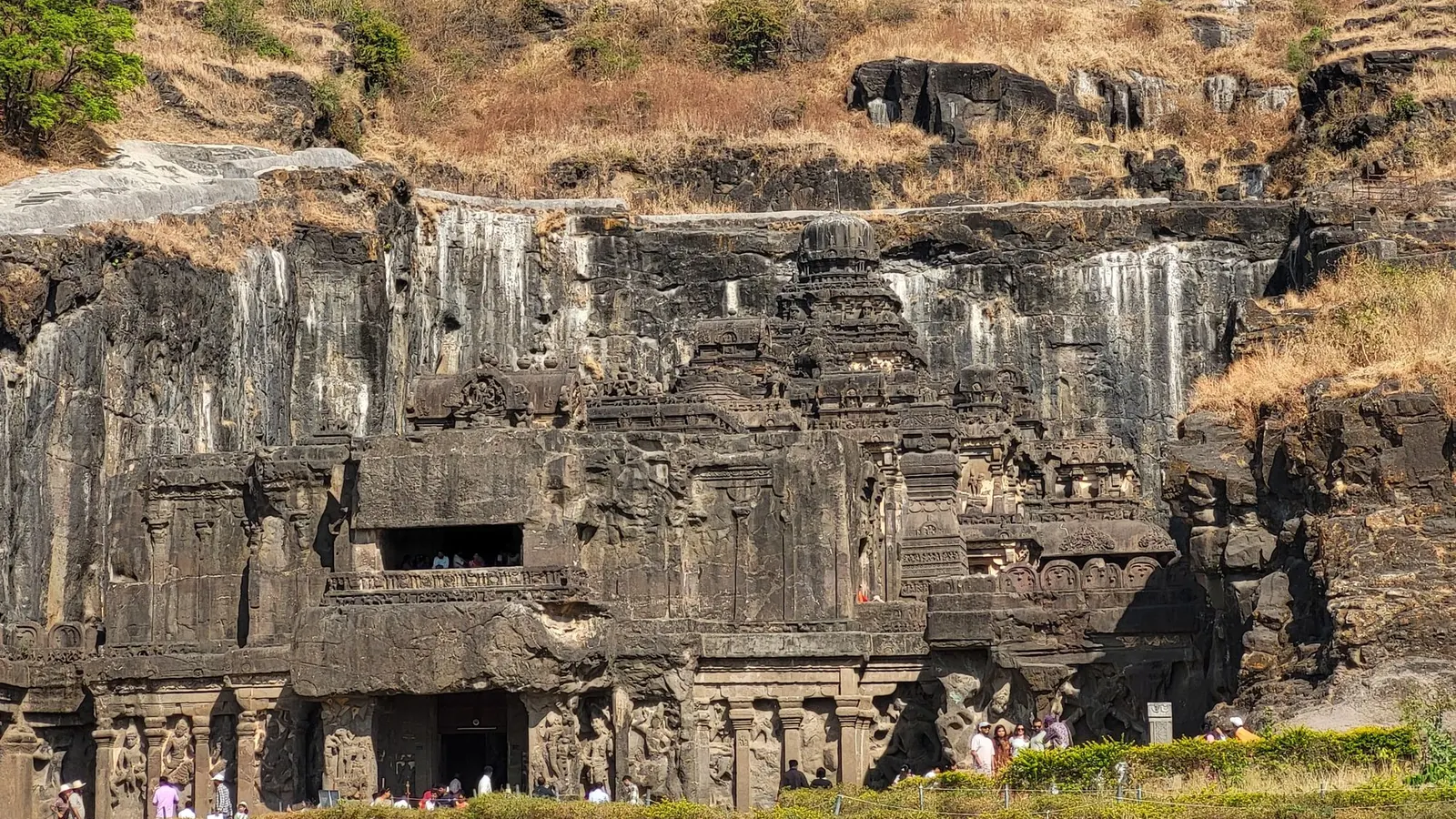
The Kailasa temple is associated with Rashtrakuta patronage and is renowned for its monolithic rock-cut form. Its architecture and sculptural detail deserve more than a short central photograph. Look at the relationship between the freestanding form and the excavated surrounding space.
Follow the permitted route and barriers. Some viewpoints or interiors may have restricted access, and climbing onto a closed area is not justified by the search for a better image. Interpretation helps explain what you are seeing without requiring unrestricted physical access to every part.
Choose additional monuments thoughtfully
Buddhist and Jain groups can broaden a first visit beyond the best-known temple. They are not interchangeable additions: their spaces and imagery offer different contexts. Check the currently open monuments and the practical route between them before deciding how much to include.
Heat, rain and walking distances can affect the day. Travellers who need easier access should ask about specific areas rather than relying on a general statement that Ellora is accessible by road. It is reasonable to see a selected group well and leave others for a longer stay.
Sources: [1]
Give the road journey a clear scope
Ellora can fit into a Chhatrapati Sambhajinagar-area heritage visit, while Ajanta is a separate excursion. State any additional fort, shrine or city stop explicitly. Each changes the route and the time available at the caves, and may have its own visitor rules.
Ask the owner to confirm pickup, waiting, parking, luggage and the final destination in the complete quote. Monument admission and guiding remain separate unless specifically agreed. Do not infer one combined cave ticket or a shared opening schedule from the decision to visit both Ajanta and Ellora.
Choosing when to visit
Check current admission, open areas and weekly closure information before departure. The site spreads across multiple monuments, so choose a manageable route for the weather and your group’s walking ability.
Planning the transport
Name the cave groups you want and the actual arrival gateway. Confirm parking, waiting and any local visitor transport separately from the rental vehicle.
Common questions
- What makes Ellora different from Ajanta?
- Ellora includes Buddhist, Hindu and Jain monuments and the monolithic Kailasa temple. Ajanta is especially associated with Buddhist caves and surviving mural paintings.
- Is Kailasa temple the whole Ellora site?
- No. It is the best-known feature within a broader collection of rock-cut monuments. Choose other groups according to your interests and available time.
- Can I visit every Ellora monument quickly?
- A rushed visit is unlikely to do the site justice. Select a manageable route and check current access, weather and the group’s walking needs.
Sources & further reading
Check the relevant official website for current visitor rules, permits and access. How we prepare our guides