
Make time for
- Rock-cut cave spaces
- Surviving mural paintings
- Buddhist sculpture
- Gorge and cliff setting
Understand Ajanta’s Buddhist setting
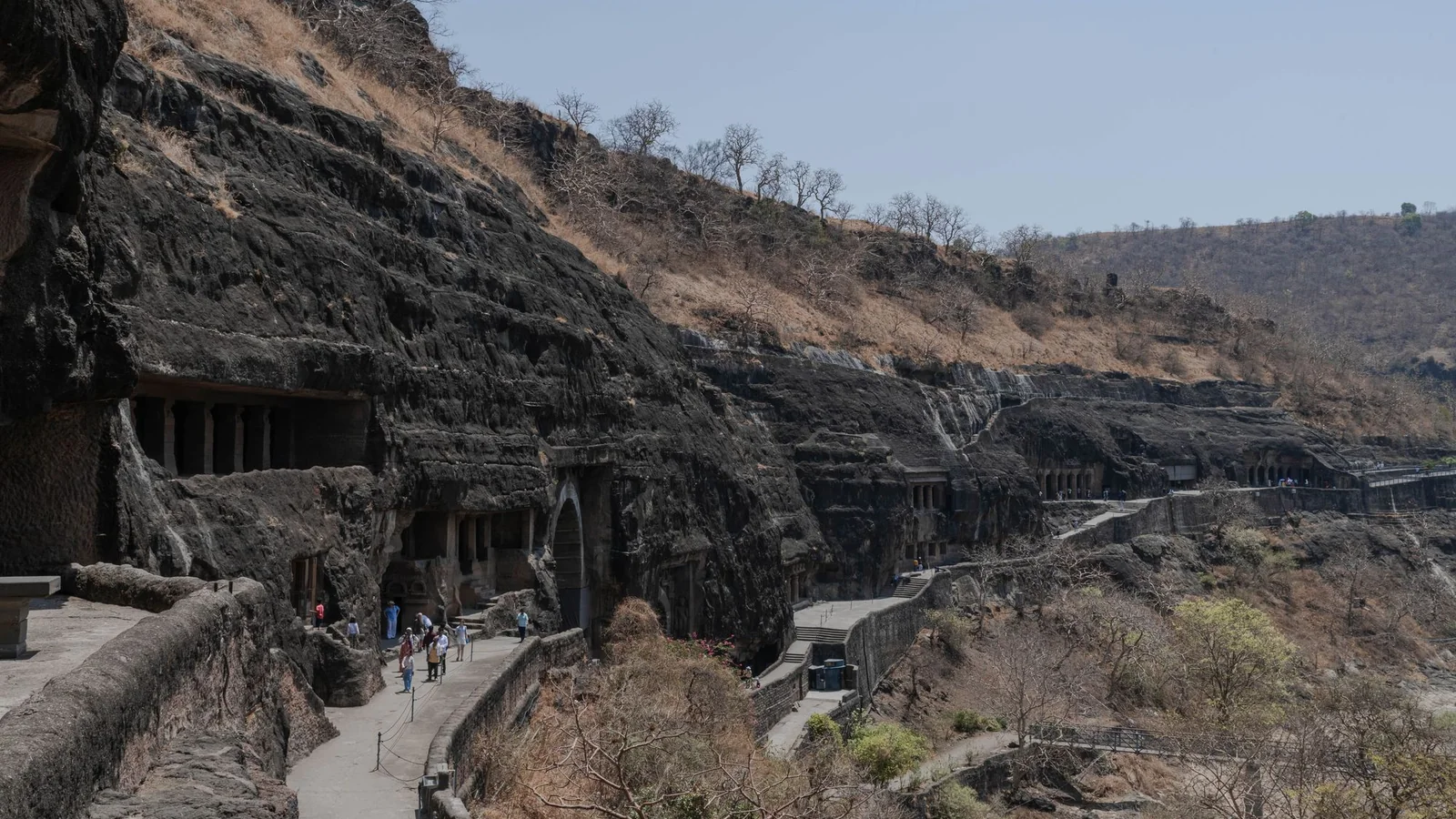
Ajanta’s caves were excavated into a cliff beside the Waghora gorge. Their spaces served Buddhist religious and monastic purposes, with work from different periods contributing to the site. Paintings and sculpture bring narrative and devotional imagery into the rock-cut architecture.
UNESCO recognizes the importance of this artistic heritage. On a visit, notice the relationship between the caves and the curved landscape as well as the interiors. These are fragile surviving works, so the experience should be shaped by conservation instructions rather than an attempt to photograph every surface.
Let the paintings set a slower pace
The murals are one of Ajanta’s defining features, but they require careful, sometimes low-light viewing. Give your eyes time to adjust and use permitted interpretation to understand the scenes. Do not assume every painted surface will be easy to see or that all caves are accessible during maintenance.
Follow restrictions on flash and photography, and avoid touching painted or sculpted areas. The aim is to see without damaging what survives. A knowledgeable guide can add context, but arranging one and confirming their terms is separate from hiring transport.
Plan for the approach and walking
The visitor approach, current shuttle arrangements and route between caves should be checked before arrival. Travellers with limited mobility need specific current information rather than a general assurance that the destination has vehicle access. Road transport ends before much of the heritage visit begins.
Choose a manageable number of caves if the group is tired or the weather is demanding. Leave time for water, meals and the return approach. A cave site can involve more walking and standing than a museum, even when the number of selected stops sounds modest.
Sources: [1]
Separate Ajanta from Ellora in the schedule
Ajanta and Ellora are distinct sites with different histories and road journeys. A longer regional visit can include both, but each deserves its own time. Do not assume they share one entrance, ticket or operating schedule because both are described as Maharashtra caves.
Provide the owner with your gateway, hotel, cave choice and final drop-off. Confirm waiting, parking and any visitor-transport component separately. If the quote includes another heritage stop, state it explicitly so the road plan and time at Ajanta remain realistic.
Choosing when to visit
Check current opening, admission and conservation instructions before travelling. The approach and cave visits involve walking; warm weather and rain can change the pace and comfort of the day.
Planning the transport
Specify Ajanta as the actual destination and confirm the visitor transport approach from the permitted parking area. A road rental and any site shuttle or admission are different arrangements.
Common questions
- Are Ajanta and Ellora the same cave complex?
- No. They are separate heritage sites with different locations and historical character. Plan distinct journeys and check each site’s visitor information.
- What is Ajanta especially known for?
- Its Buddhist rock-cut architecture, sculpture and surviving mural paintings are central to its significance. Careful viewing and conservation rules are part of the visit.
- Does a vehicle reach the cave entrances?
- Do not assume that. Check the permitted parking, any current site transport and the walking approach separately, particularly if someone needs assistance.
Sources & further reading
Check the relevant official website for current visitor rules, permits and access. How we prepare our guides