
Make time for
- Main gateway and garden axis
- Marble mausoleum
- Stone inlay and carved detail
- Yamuna-side setting
A memorial within a larger complex
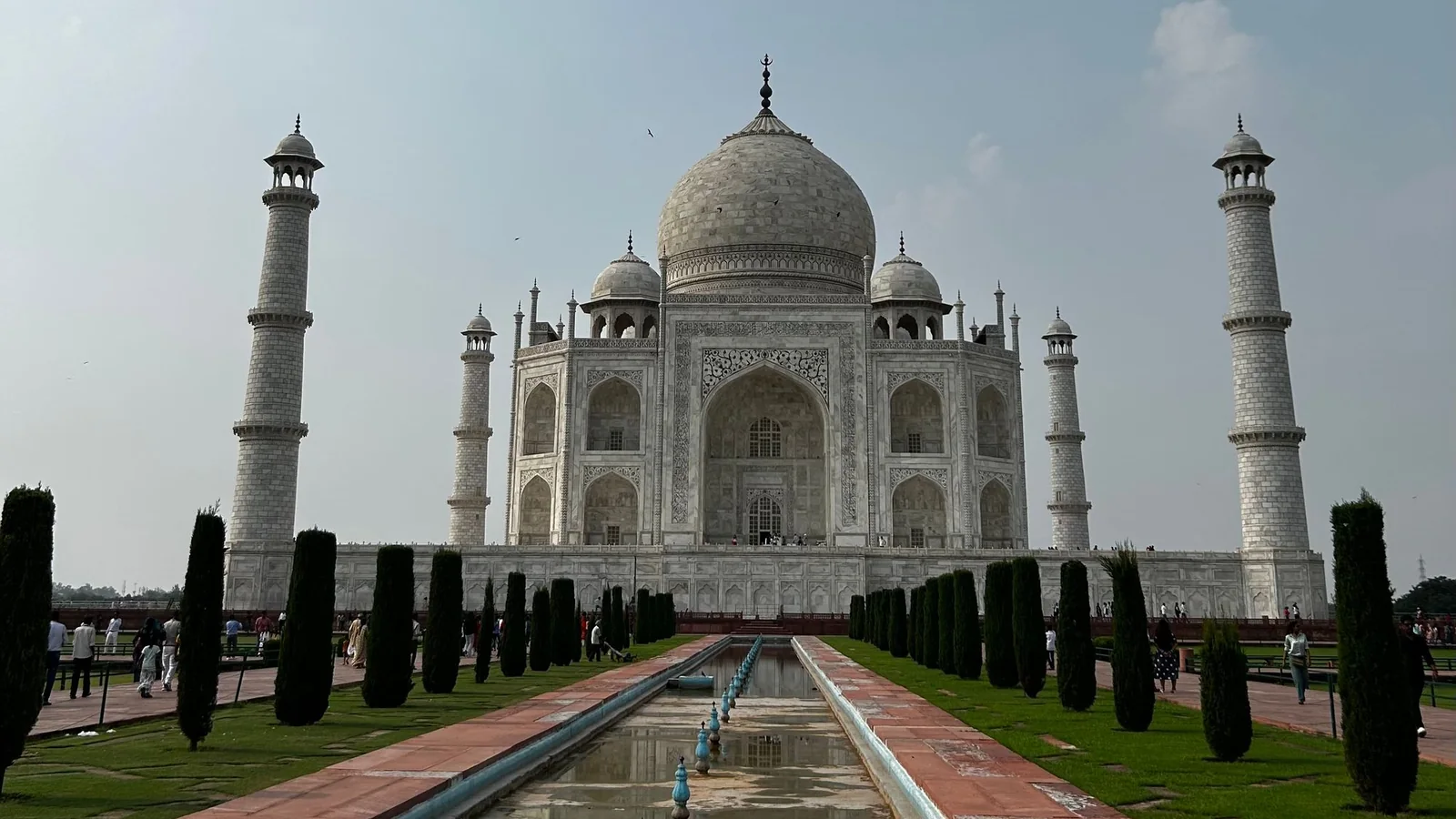
The Taj Mahal’s identity comes from the relationship between the mausoleum and its setting. Shah Jahan commissioned it as a memorial to Mumtaz Mahal, and the result brings together architecture, decorative craft and a deliberately arranged garden landscape.
UNESCO describes its importance as a masterpiece of Mughal architecture. On a visit, look beyond the familiar frontal view: the entrance sequence, side buildings and river edge help explain how the whole complex was composed. This is a place to notice slowly rather than hurry through for one picture.
Look closely at the details
The garden axis establishes the first view, while the building reveals more as you move closer. Stone inlay, carved surfaces and calligraphic decoration reward attention. Light can change the appearance of the marble, which is one reason different visits produce different impressions.
Respect barriers and conservation instructions. Avoid touching delicate decorative surfaces or attempting to reach an area that is closed. A knowledgeable guide can make the architecture more legible, but guiding arrangements and their cost should be confirmed independently of the vehicle rental.
Check admission before travelling
Use the official Taj Mahal website or authorized ticket channel for current opening, closure, entry and permitted-item information. Different tickets or visitor categories may have different conditions. Recheck the rules close to your visit, rather than relying on an old screenshot or someone else’s itinerary.
Keep security and the walk from the drop-off in your schedule. Travellers with limited mobility should investigate current assistance and access arrangements before departure. A driver can discuss where stopping is permitted, but should not be your only source for monument admission or accessibility details.
Sources: [1]
Build the rest of the Agra day around it
Pairing the Taj Mahal with Agra Fort can give a first visit historical depth. A longer stay may leave room for a garden or another Mughal tomb. If you are travelling from Delhi, include the intercity road journey and meals when deciding what else fits.
For a vehicle enquiry, state whether you need a city pickup, a railway transfer or an outstation return. Confirm waiting, parking, tolls and the final drop-off. Monument access, tickets and any guided visit remain separate unless clearly included in your written arrangement.
Choosing when to visit
A clearer morning or afternoon can change the view, but no time slot guarantees empty grounds or ideal light. Check current visitor rules and weather before choosing a date.
Planning the transport
Arrange a permitted drop-off or parking point in Agra. Confirm the remaining approach to the entrance, especially for visitors who need help with walking.
Common questions
- Where is the Taj Mahal?
- It is in Agra, Uttar Pradesh, on the Yamuna river. Plan the arrival as an Agra journey and check the monument’s permitted approach separately.
- Is the Taj Mahal open every day?
- Check the official website for current closures, visiting categories and opening rules before booking your journey. Do not assume a daily sightseeing schedule applies to this monument.
- Can I visit the Taj Mahal and Agra Fort together?
- They are often paired in an Agra itinerary. Give each site its own walking and entry time, and confirm the vehicle’s waiting and parking arrangements.
Sources & further reading
Check the relevant official website for current visitor rules, permits and access. How we prepare our guides