
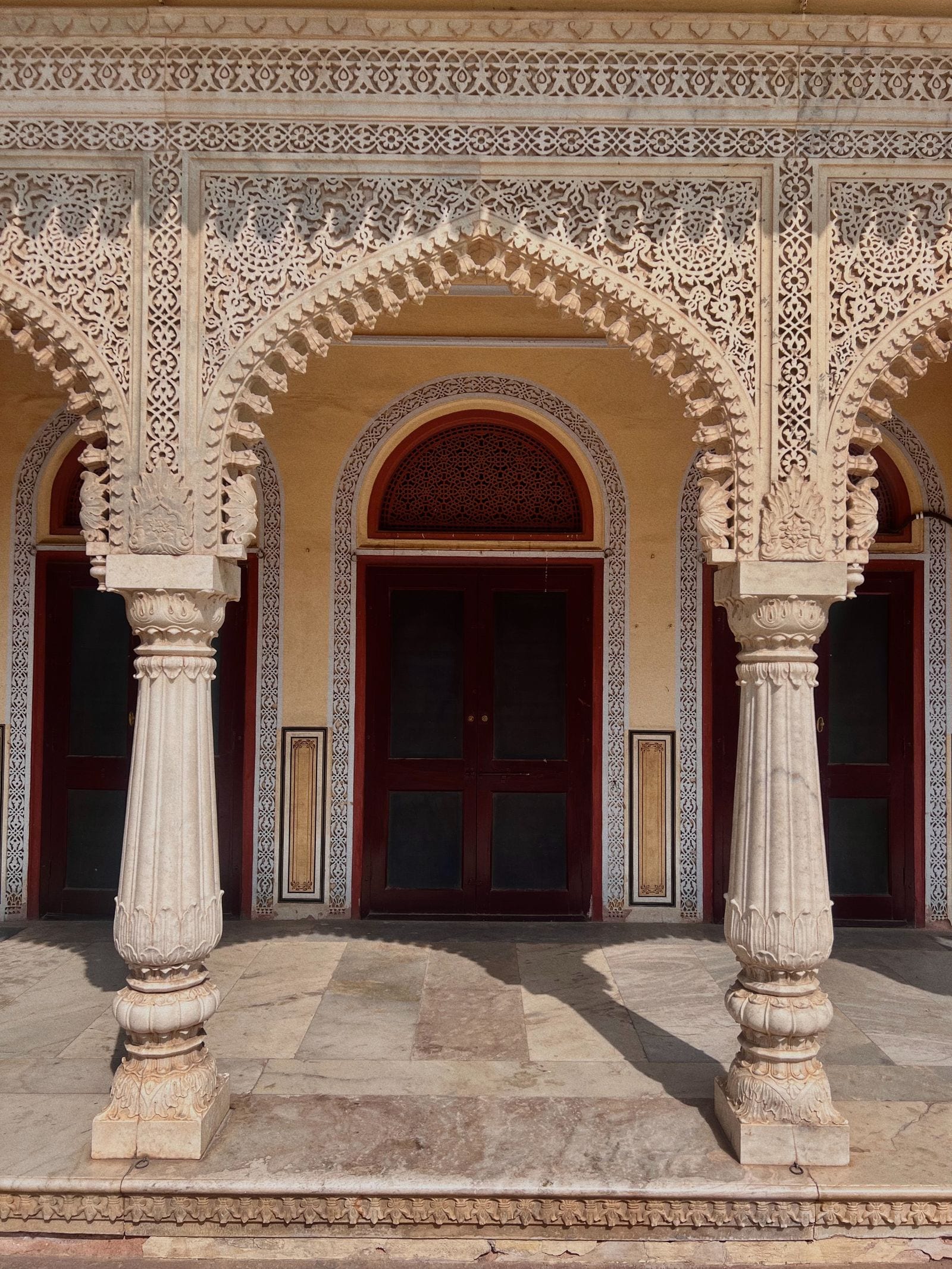
Make time for
- Hawa Mahal
- City Palace
- Jantar Mantar
- Amber Fort
Read the plan of the Pink City
Jaipur was founded in the eighteenth century under Sawai Jai Singh II, with a planned street pattern that distinguishes its historic centre. Its bazaars and civic arrangement are as much a part of the heritage as the palace façades that appear in travel photographs.
The walled city’s UNESCO recognition concerns this urban character. As you explore, notice how markets, gates and prominent buildings fit into the street layout. A short walk with time to look at shopfronts can explain the city better than moving immediately from one entrance to the next.
Choose an old-city cluster
Hawa Mahal, City Palace and Jantar Mantar are useful starting points for a first visit. They offer different experiences: a distinctive palace frontage, royal spaces and an astronomical observatory. Check admission and visitor access at each site rather than assuming one ticket or opening rule covers the group.
Allow time for the market between attractions. Crowded pavements and road crossings can slow a family group, especially with children or older relatives. Pick an easy meeting point and avoid arranging an immediate departure from a narrow lane when everyone may finish at different times.
Sources: [1]
Give Amer a separate place in the plan
Amber Fort, also called Amer Fort, lies outside the central old-city cluster. Its elevated setting, courtyards and palace interiors make it a substantial visit. Add the journey and the approach to the entrance when deciding how much else to include that day.
Jaigarh or other hill viewpoints may suit a longer visit, but their access and tickets are separate. A late arrival is a good reason to simplify the plan. You do not need to include every fort to understand Jaipur’s relationship with the surrounding hills.
Sources: [1]
Make the transport fit your sightseeing
A Jaipur vehicle enquiry should distinguish a hotel transfer from a full local sightseeing day or a Rajasthan circuit. Share your actual stops and return point, and ask how parking, waiting and additional distance will be charged. Attraction admission is a different arrangement.
If you are continuing to Udaipur, Jodhpur or Delhi, discuss that onward journey separately. Rajasthan’s famous cities should not be treated as neighbouring stops that fit into one afternoon. Choose the order around your arrival and departure gateways, then leave proper time for the roads between them.
Sources: [1]
Choosing when to visit
Cooler months often suit courtyard visits and long walks. Summer heat makes shaded pauses useful; monsoon weather can affect outdoor plans. Festivals and holiday periods may bring busier streets.
Planning the transport
Group walled-city sights together and treat Amer as a separate road leg. Discuss pickup access, waiting and parking before choosing a larger group vehicle.
Common questions
- What is Jaipur’s Pink City?
- The name refers to Jaipur’s historic walled-city identity and distinctive pink-toned streetscape. The city’s heritage also includes its planned urban layout, markets and public spaces.
- Can Amber Fort and the old city fit in one day?
- They can be combined if you choose a modest number of sights and account for the road transfer. Check current access and allow enough walking time at the fort.
- Is Jaipur a useful stop in a Rajasthan road trip?
- Yes. It is often combined with other Rajasthan cities, but each intercity leg needs time and a clear quote. Pick a circuit that matches your arrival and departure points.
Sources & further reading
Check the relevant official website for current visitor rules, permits and access. How we prepare our guides