
Make time for
- Street-facing façade
- Screened windows and openings
- Palace interiors where open
- Nearby old-city markets
Understand the famous frontage
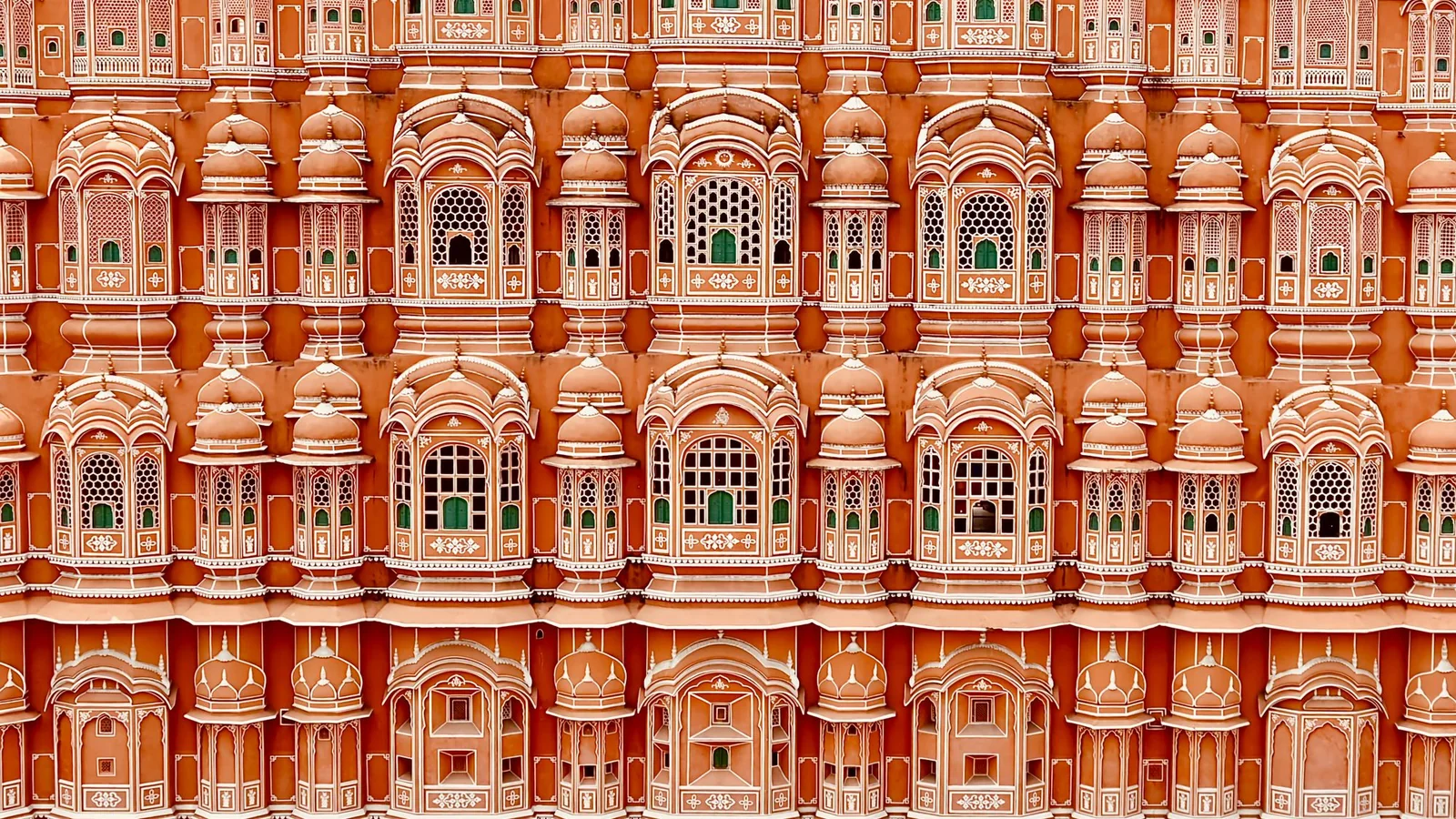
Built in the late eighteenth century under Sawai Pratap Singh, Hawa Mahal belongs to Jaipur’s royal architectural setting. Its screened openings are associated with women of the palace observing street activity while remaining behind the façade. The building’s design is more specific than a decorative wall built for modern photographs.
Look at the repeated openings, projecting details and how the structure meets the street. Rajasthan Tourism’s account helps connect the building with Jaipur’s palace history. The surrounding market remains active, so your view of the façade is also a view of everyday city life.
Sources: [1]
Separate the exterior view from the visit
Many travellers first encounter Hawa Mahal from the street. That view is memorable, but it is not the same as going inside where visitor access is available. Check the current entrance, ticket and open areas before deciding how much time to reserve.
The interior experience can involve narrower spaces and climbing. If someone in the group finds steps difficult, investigate current access arrangements before arrival. Do not infer full accessibility from the ease of photographing the façade at ground level, and avoid building the day around areas that may be closed.
Sources: [1]
Stay in the old-city neighbourhood
City Palace and Jantar Mantar are natural companions for a Hawa Mahal visit, with each adding a different aspect of Jaipur’s heritage. Rather than rushing to a distant fort straight away, leave time for the bazaars that connect these sites and for a meal nearby.
Markets can be crowded, and a group may move more slowly than expected. Agree a meeting point if people browse separately. Photograph shops and people thoughtfully, and keep entrances and traffic clear while stopping for the building’s best-known view.
Plan the road approach rather than the doorstep
The old city’s traffic, stopping restrictions and busy pavements matter to a vehicle plan. Ask the owner where pickup and drop-off are practical for your chosen vehicle, especially if it is a tempo traveller or another larger group vehicle.
State whether the stop is a quick exterior look or a ticketed interior visit, then confirm waiting charges and the next destination. A clear stop description helps the owner discuss the route. It does not replace the attraction’s official admission information or guarantee access right beside the façade.
Sources: [1]
Choosing when to visit
A visit involves a busy urban setting as well as a heritage building. Check current admission and interior access, and choose a time when your group can manage the market streets comfortably.
Planning the transport
Ask for a permitted old-city drop-off and identify the visitor entrance independently. A photograph from the street and an interior visit require different amounts of time.
Common questions
- Is Hawa Mahal the same as Jaipur City Palace?
- They are connected by Jaipur’s royal history, but they are distinct visitor attractions with separate approaches and potentially separate admission arrangements.
- Can I photograph Hawa Mahal without visiting inside?
- The exterior can be viewed from public streets, subject to local access conditions. Keep pavements and traffic clear, and distinguish that stop from an interior visit.
- What should I combine with Hawa Mahal?
- The old-city markets, City Palace and Jantar Mantar form a practical cluster. Check each attraction’s current entry information before planning the order.
Sources & further reading
Check the relevant official website for current visitor rules, permits and access. How we prepare our guides