
Make time for
- MG Marg
- Enchey Monastery
- Namgyal Institute of Tibetology
- Separately planned Rumtek visit
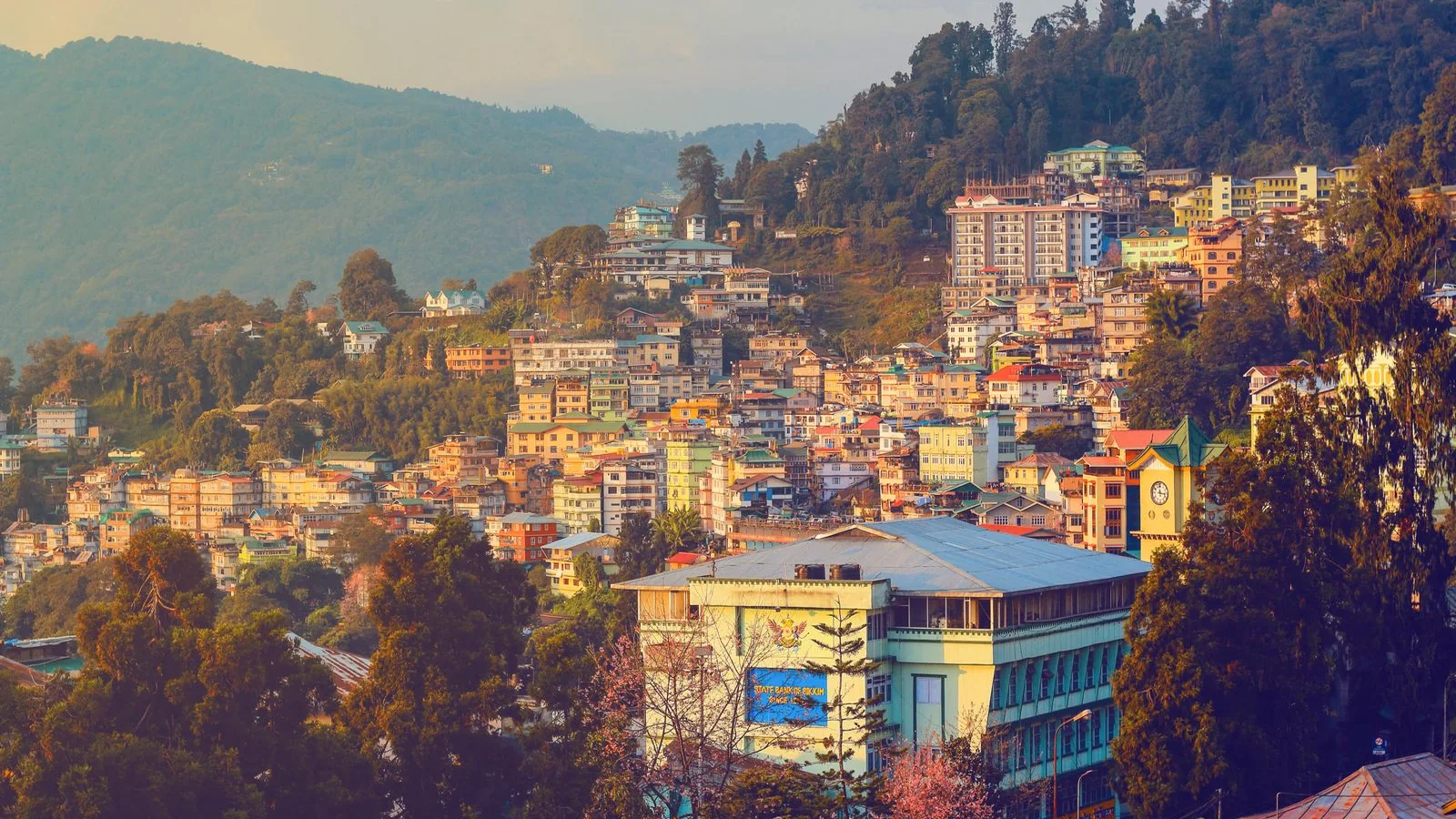
A capital city built into a hill landscape
Gangtok combines its role as Sikkim’s capital with markets, cultural institutions, religious places and everyday neighbourhoods on steep terrain. The city rewards time on foot where suitable, but a short map distance may involve slopes, steps or winding roads. Choose a stay according to the group’s needs rather than only its distance from a familiar landmark.
The surrounding mountain setting adds to the experience, but visibility changes with weather. Treat views as one part of the visit. Cultural institutions, cafés and neighbourhood walks can make a rewarding day even when distant peaks are hidden, especially if the group is using Gangtok to settle into a longer Sikkim journey.
Connect the promenade with cultural visits
MG Marg is a familiar pedestrian focus, useful for walking and spending time in the town centre. Enchey Monastery and the Namgyal Institute of Tibetology offer different perspectives on the region’s religious and cultural life. Check institutional visitor rules and respect quiet areas, photography limits and the routines of people using them.
Rumtek is a separate outing beyond a simple promenade walk. If you want to visit, confirm the current route and institutional arrangements before adding it to the day. A monastery is a living religious space, so understand what is appropriate rather than expecting unrestricted entry or treating every ceremonial activity as a visitor performance.
Separate Gangtok sightseeing from mountain permissions
Popular excursions to high-altitude or border-related areas are not ordinary city stops. Current visitor eligibility, permits, weather and road access govern them. Consult official Sikkim Tourism information and an appropriate local operator for the exact route instead of assuming a generic Gangtok vehicle can take you everywhere on a tourism list.
Allow time to arrive, rest and understand the local plan before attempting a demanding outing. Consider altitude and individual health needs when choosing routes, with appropriate medical advice where needed. A shorter cultural day in town may be a better option than an ambitious excursion chosen only because it is frequently mentioned online.
Use practical meeting points on a steep city map
For Bagdogra or New Jalpaiguri transfers, share the arrival details and full hotel address. Ask the property about the last approach and any steps from a road endpoint. For town sightseeing, agree permitted collection points near pedestrian areas so nobody expects a car to enter a place reserved for walking.
Confirm driver inclusion, waiting, parking, the full itinerary and quote directly with the owner. If a separately arranged excursion changes, agree the revised vehicle schedule before assuming it remains available. Build an adequate margin before returning to a critical train or flight, since the gateway journey is a substantial stage rather than a short city transfer.
Choosing when to visit
Spring and autumn are popular for city and hill visits. Monsoon conditions can affect roads, and clear Himalayan views are never guaranteed by the season.
Planning the transport
Agree the exact hotel and permitted pickup near pedestrian areas. Gateway transfers and high-altitude excursions differ from a local town itinerary.
Common questions
- Can a car drive along every central Gangtok street?
- No. Pedestrian and local access restrictions apply. Agree a permitted meeting point near your chosen area.
- Are high-altitude excursions ordinary city sightseeing?
- No. They require separate checks for permissions, visitor eligibility, current access and suitability.
- Will I see clear mountain views from the town?
- Visibility depends on weather. Keep cultural and town-based plans worthwhile in their own right.
Sources & further reading
Check the relevant official website for current visitor rules, permits and access. How we prepare our guides