
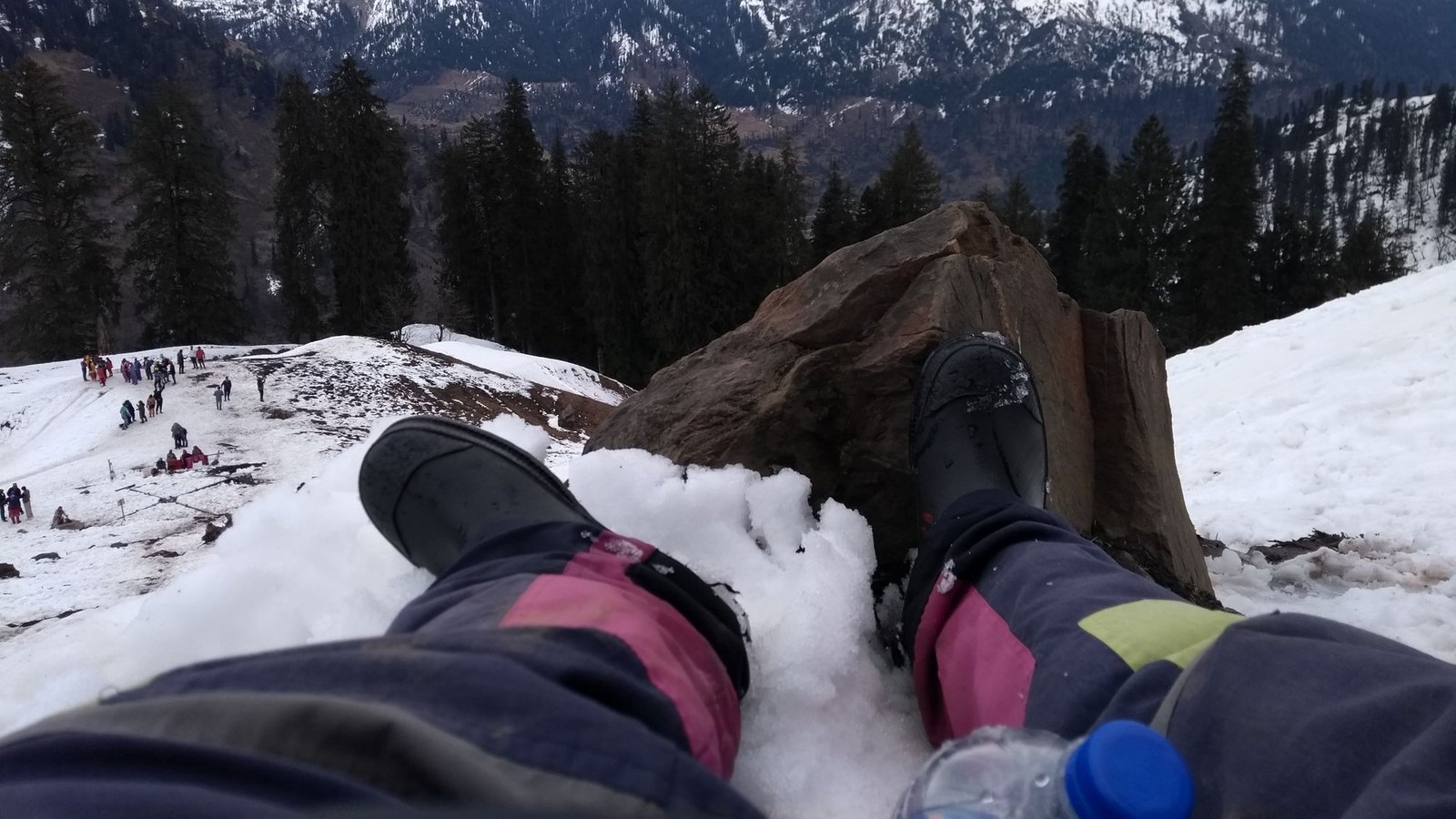
Build outfits from layers you can change
Start with comfortable layers you already know how to wear, then add insulation and an outer layer appropriate to expected wind and precipitation. Think about the whole day: a journey in a heated vehicle, time outside and a meal indoors can call for different combinations. Clothes that are easy to remove or put back on are useful.
Give each traveller their own head covering, gloves and enough changes for the length of the stay. Keep a spare dry set available after a wet outing. Avoid judging warmth from a garment’s appearance alone; fit, comfort and the way the layers work together matter more than whether an outfit resembles a travel photograph.
Pack for wet shoes and ordinary walking
Choose footwear suitable for your planned walking and likely wet conditions. Check the fit with the socks you intend to use, and bring spare socks. Smooth fashion soles can be a poor choice for wet or slippery ground. Follow local advice on where to walk; footwear does not turn an icy slope into an appropriate route.
Carry a small day bag for the layers you remove, water and personal essentials. Keep wet footwear or clothing apart from the rest of your luggage, using a washable bag or another simple separation. Travel with luggage the group can handle on the property’s final approach, especially if a vehicle cannot stop directly at the door.
Before closing the bags, check that each person can find their own hat, gloves and spare socks without emptying the suitcase. For a family, a separate pouch for a child’s change of clothing can simplify an outing. Leave some luggage space for the layers everyone removes when boarding the vehicle again.
Keep the arrival essentials out of the suitcase
Your warmest useful arrival layer should be accessible before you unload. Keep your ID, reservation details, property contact, charged phone and charging equipment together. Save key addresses offline. A paper copy or a second person holding the details can help when one device is unavailable.
Bring your usual personal supplies and prescribed medicines as applicable, with any individual travel needs discussed with a qualified professional. This is a packing checklist, not guidance on treatment. Check room heating, hot water and backup arrangements with the property; it is better to understand the accommodation than to plan around assumptions about what every winter stay includes.
Check the outing before buying specialist gear
Manali’s town attractions and higher outings are different experiences. Look at the actual itinerary before deciding what additional equipment is needed. If an operator offers an activity, ask what equipment is supplied, how sizes are fitted, what instruction is provided and which conditions would stop the activity.
Recheck the forecast shortly before leaving, then adjust the bag to the planned days. Do not buy a large amount of specialist equipment solely because an activity is shown in a listing photograph. First establish whether that activity is being offered on your dates, what it involves and whether it suits the people travelling.
Common questions
- Do I need snow boots for every Manali winter visit?
- The right footwear depends on your itinerary and expected conditions. Discuss higher outings separately, and choose shoes that fit well and suit the walking and wet surfaces you anticipate.
- Does a hotel in Manali always include room heating?
- Confirm the actual heating arrangement, charges if any, hot-water supply and backup provisions with the property. Do not assume they are identical across stays.
- Should I pack skiing equipment for a general winter holiday?
- First confirm an actual activity with its operator, including suitability, instruction and supplied equipment. A town visit or sightseeing transfer does not by itself require or include a skiing session.
Sources & further reading
Check the relevant official website for current visitor rules, permits and access. How we prepare our guides