
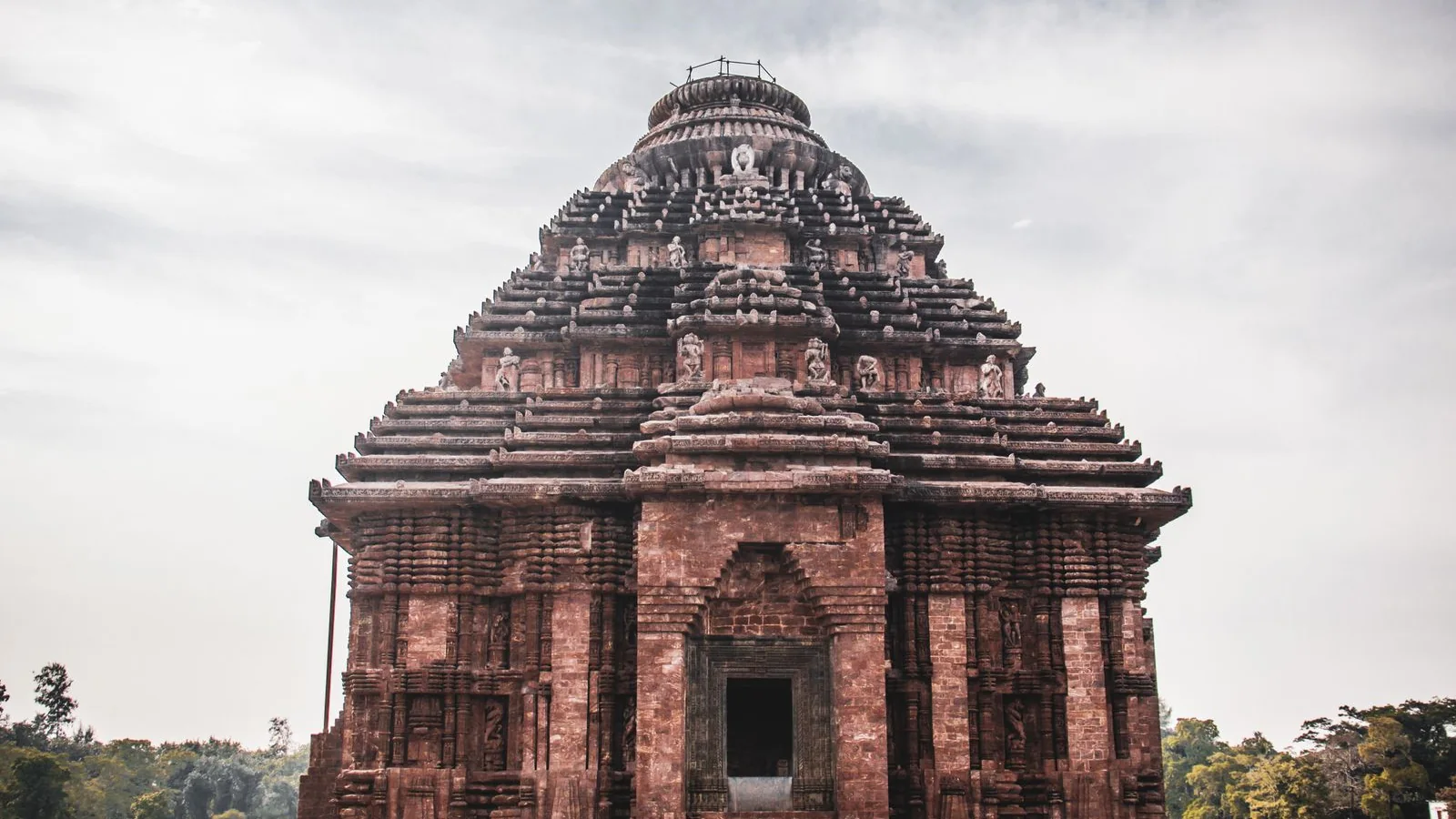
Make time for
- Sun Temple architecture
- Carved chariot wheels
- Sculptural details
- Selected nearby coastal stops
Understand the chariot idea before walking around it
Konark’s Sun Temple is associated with the Eastern Ganga period and represents a monumental stone chariot dedicated to the sun. Its wheels, sculptural programme and architectural composition are easier to appreciate with a little historical context. Read the official interpretation or consider a qualified guide rather than reducing the visit to a familiar photograph.
The UNESCO property recognises the monument’s outstanding heritage value. What survives is also shaped by loss, conservation and interpretation, so distinguish the present remains from reconstructions of the original structure. Treat popular stories carefully, and look for explanations grounded in the monument’s documented architecture and historical setting.
Give the details time and respect the barriers
Carved wheels and extensive sculptural details reward looking slowly. A guide can help explain themes and the way the chariot concept relates to the wider design. Stay behind conservation barriers and avoid touching or climbing carved surfaces. The ability to reach a stone feature does not establish permission to use it as a seat or photo platform.
Check current official admission and visitor arrangements before departure. Museum or interpretation spaces, when part of your plan, may have separate schedules. If the group has mobility needs, ask about the actual walking surfaces and entrance route rather than assuming a nearby vehicle stop makes every area easy to access.
Choose a heritage visit or a broader coastal day
Konark is often paired with Puri or approached from Bhubaneswar, but a meaningful monument visit requires time on foot. Add a coastal stop only if it fits the group’s interests and the conditions. Trying to combine every well-known Odisha destination into one day can leave the temple as a hurried stop between drives.
A meal break and time to discuss what you have seen can make the route more enjoyable. Coastal viewpoints or beach areas have their own access and safety conditions. Do not assume that monument admission includes another attraction or that reaching the shore establishes safe swimming or availability of a water activity.
Share the whole road route before confirming
Tell the owner the pickup address, planned temple visit, any coastal stop and final drop-off. Puri and Bhubaneswar are distinct starting points, so a generic Konark request does not establish the route. For a station or airport departure afterwards, allow the necessary road time and a practical margin rather than working from the monument’s map distance alone.
Confirm driver inclusion, parking, waiting, the billing basis and complete quote. Admission and guiding remain separate unless specifically included. Carry water and plan exposed walking for a comfortable part of the day. If weather changes, shorten the outdoor plan and agree the revised itinerary directly with the owner.
Choosing when to visit
Cooler, relatively dry periods make exposed monument walks more comfortable. Heat and rain should influence the time of day and duration of the visit.
Planning the transport
Specify whether you begin in Puri or Bhubaneswar and whether coastal stops are included. Admission and guiding are separate from the drive.
Common questions
- Is Konark a city-sized sightseeing area or one main monument visit?
- The Sun Temple is the main heritage focus, with other town and coastal possibilities that should be planned separately.
- Can I climb or touch the carved wheels?
- Follow conservation barriers and site rules. Do not climb or handle protected sculptural surfaces.
- Does a Puri-to-Konark vehicle quote include entry?
- Only if expressly stated. Ask separately about monument tickets and guiding.
Sources & further reading
Check the relevant official website for current visitor rules, permits and access. How we prepare our guides