
Make time for
- Virupaksha Temple
- Vittala Temple and stone chariot
- Royal enclosure
- Hemakuta Hill
Understand the city behind the ruins
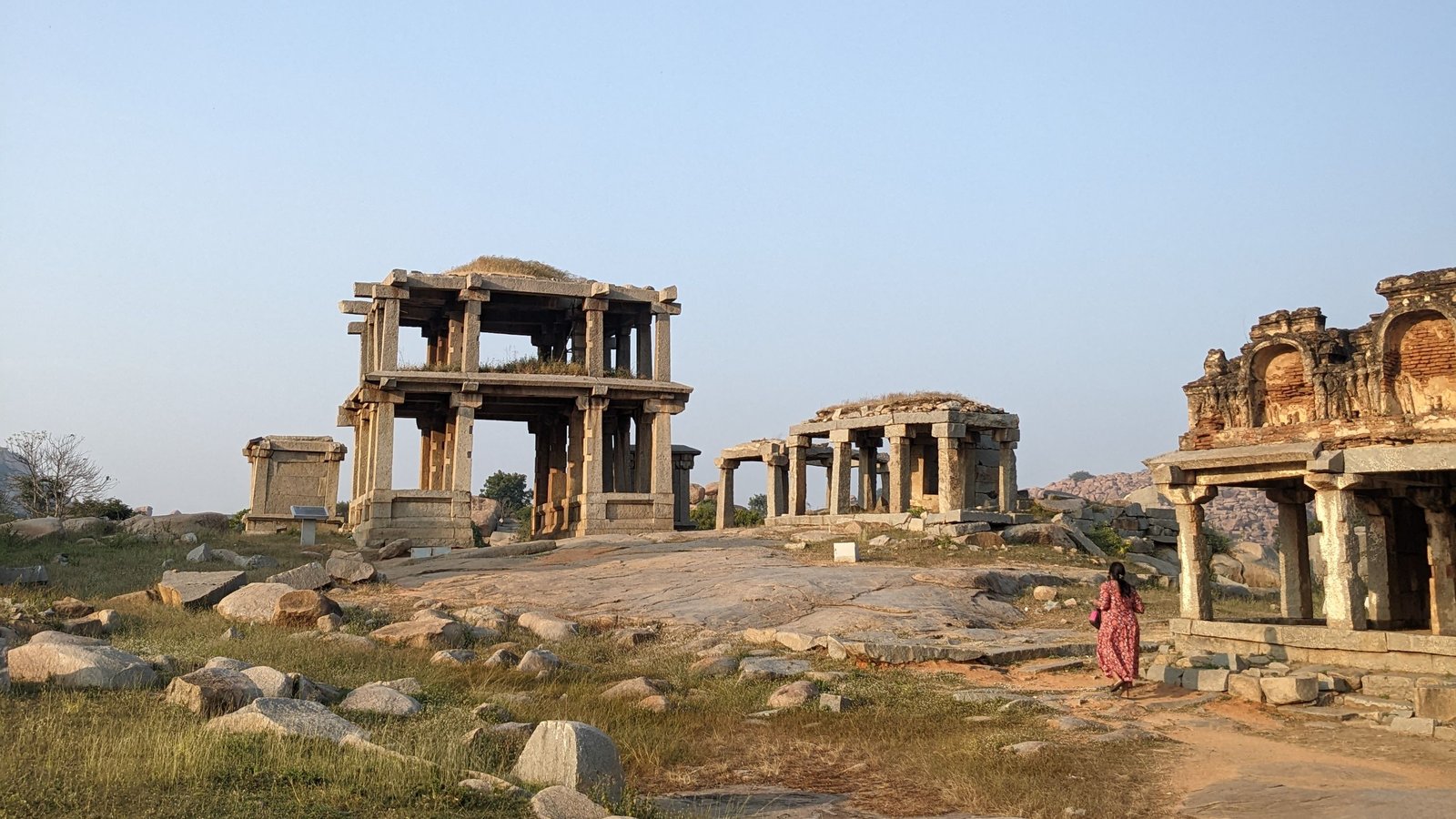
Hampi was part of the capital of the Vijayanagara Empire, whose surviving remains include sacred buildings, ceremonial spaces, water structures and evidence of commercial life. Seeing the site as a former city makes the visit richer: the ruins belong to a landscape of movement, ritual and government rather than being a collection of unrelated stone buildings.
The UNESCO property records the scale and importance of this capital. Not every structure served the same purpose, and some identifications require interpretation. A knowledgeable local guide can help connect the visible remains to the wider story, especially if you have time for only a selection of the monument groups.
Separate the sacred and royal areas
Begin with the Virupaksha Temple area and the former bazaar, allowing time for the active religious setting as well as the architecture. Hemakuta Hill adds a different perspective on the surrounding landscape. The Vittala complex, famous for its stone chariot, deserves its own visit rather than a hurried photograph between other stops.
The royal area includes remains such as the Lotus Mahal, elephant stables and the royal enclosure. These places help explain the variety of life in the capital. Follow conservation barriers, avoid touching carvings unnecessarily and never treat stone structures as climbing equipment. Protected monuments are places to observe, not surfaces to test.
Give the monuments time and the heat space
Group your itinerary geographically and keep the exposed walks for the more comfortable part of the day. Carry drinking water, sun protection and shoes suited to uneven ground. Hampi’s distances are easy to underestimate on a small screen because a nearby map pin can still involve a walk across a large archaeological area.
Travellers with limited mobility should ask about the actual surfaces and permitted drop-off points at each chosen monument. Reduce the list if needed rather than turning every stop into a rushed effort. A pause overlooking the boulder landscape can be as memorable as adding another temple to the day.
Agree how transfers and sightseeing fit together
Confirm your arrival station, accommodation location and which bank of the river you will stay on. Hosapete is a common road and rail gateway, while local arrangements depend on the precise property. Tell the vehicle owner whether you need only a transfer or a vehicle available between sightseeing clusters.
If a river crossing or guided activity is part of your plan, verify its operation and conditions separately. Do not assume a road quote includes a boat, guide or monument ticket. Ask for the final pickup point, waiting policy and return arrangement in writing, especially if you finish the day at a different cluster from where you began.
Choosing when to visit
Cooler, drier months are easier for exposed monument walks. Heat, rain and slippery rock surfaces should influence the pace and route.
Planning the transport
Hosapete is a useful gateway. Arrange transfers between monument clusters and leave time on foot; a vehicle cannot replace the walking needed inside the archaeological landscape.
Common questions
- Can I see Hampi without walking?
- Transfers help between clusters, but many ruins require walking on uneven and exposed ground. Ask about individual access needs before planning the day.
- Is the stone chariot the whole Hampi site?
- No. It belongs to the Vittala complex within a much larger landscape of sacred and royal remains.
- Does road transport include a guide or tickets?
- Only if specifically agreed. Vehicle hire, guiding, monument admission and river activities are separate services.
Sources & further reading
Check the relevant official website for current visitor rules, permits and access. How we prepare our guides